A House of Stories, Continued
A multigenerational Sands Point home unfolds through layered design, where three distinct tile installations—from serene to expressive—reflect a life lived across time.
All images courtesy Durston Saylor
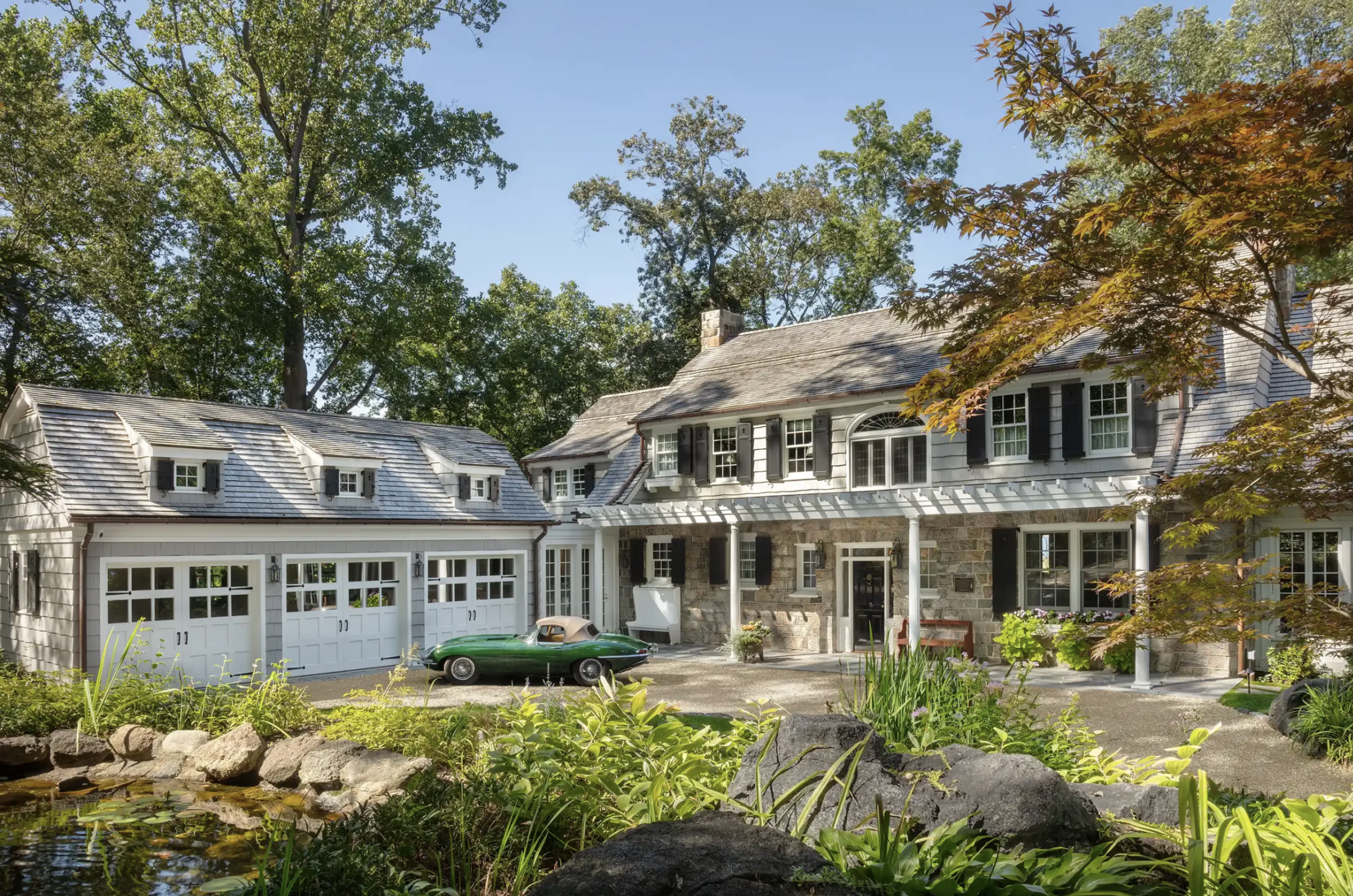
There are houses that sit quietly in time—and then there are houses that gather it, layer by layer, shaped as much by the people who move through them as by the hands that first built them. The Sands Point house is one of those rare homes.
What began in 1928 as a wedding gift—a father building a home for his daughter while she honeymooned abroad—has since lived many lives: a wartime refuge for British sailors, a place of backyard weddings spanning generations, and a working home where more than forty books were written. Over time, it came to be known as Bag End, a name borrowed from Tolkien and worn lightly, but fittingly, by a house that feels less like a fixed object and more like an accumulation of memory.
That sense of memory shaped the renovation from the outset. The current steward of the house, Karli H—, made her priorities clear early on, telling architect Jim Smiros of Smiros & Smiros Architects, “Don’t change any of the hardware… the hand of every person I’ve ever loved has touched those knobs.” It’s the kind of directive that doesn’t just guide decisions—it defines them.
For Smiros, it clarified the larger approach. The goal was never to return the house to a single moment, but to let it continue reflecting the many periods it had already lived through—allowing Arts & Crafts, Art Nouveau, and midcentury elements to coexist naturally. It’s a house, he notes, that was meant to feel lived in, not staged.
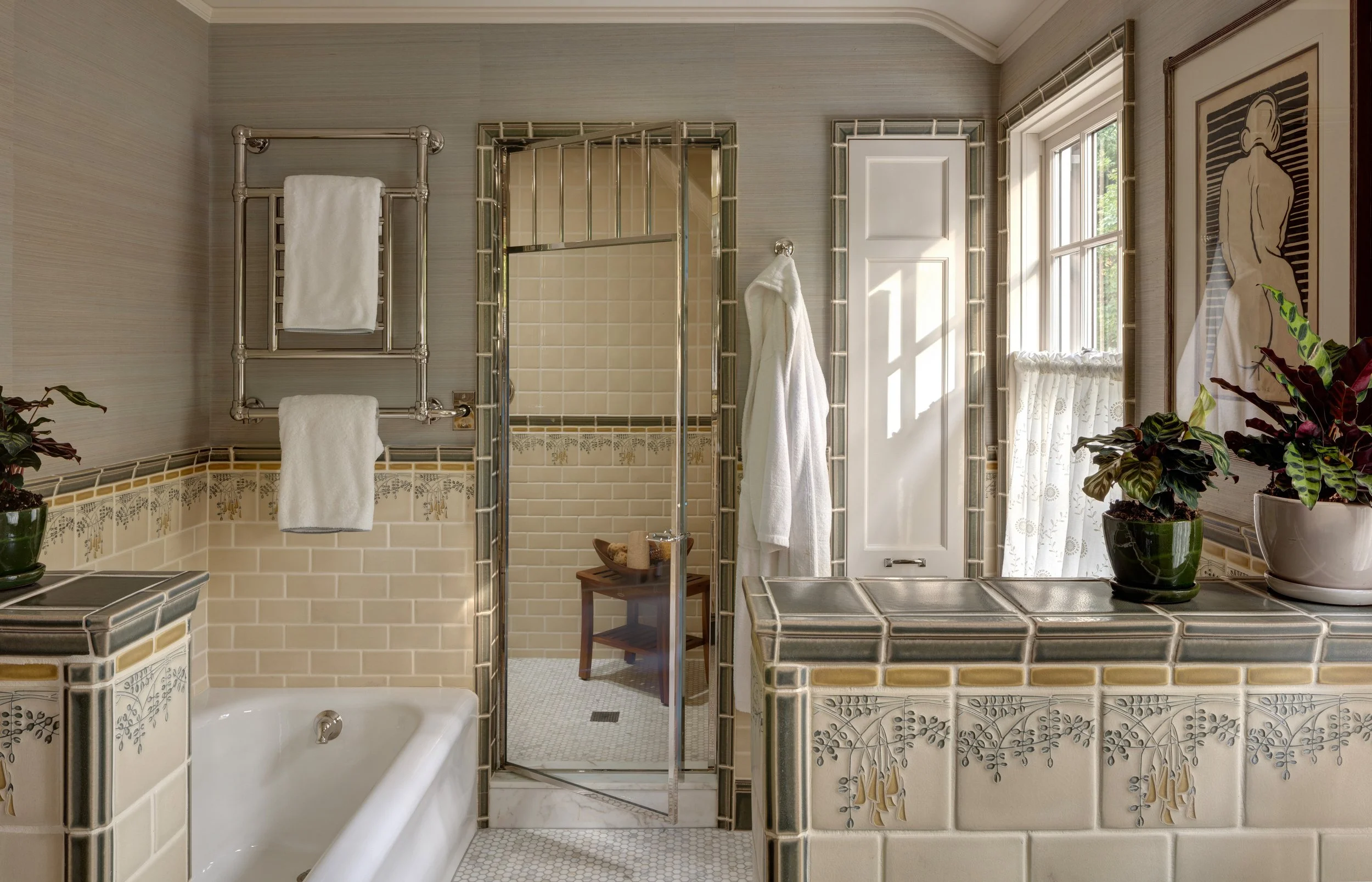
A pattern that feels like it belongs
Within that framework, the primary bathroom became one of the most personal spaces in the house—less a designed room than a reflection of how Karli sees and remembers the home.
“I was doing most of [the design research]… it was really a COVID project for me,” she says, describing a process shaped by time, curiosity, and a willingness to follow instinct.
That instinct had been forming long before the renovation began. Years earlier, she had started collecting tile without a clear plan—drawn to relief pieces she discovered at an architectural salvage yard outside Portland, Oregon. Many featured sculpted faces. “I just thought they were beautiful… I didn’t really know why I was buying them,” she recalls. Over time, more followed—antique show finds, pieces sourced online—until that loose collection found its place in the fireplace surround in the den. What began as intuition eventually resolved into composition.
The search for bathroom tile unfolded in much the same way. Hours spent moving through images—vintage references, historic interiors, contemporary work—eventually led her to a pattern that felt both familiar and complete. “I did a huge amount of searching on Pinterest… and once you start, the algorithms take you all over the place.”
Somewhere in that drift, the pattern surfaced.
“I just thought it was really graceful.”
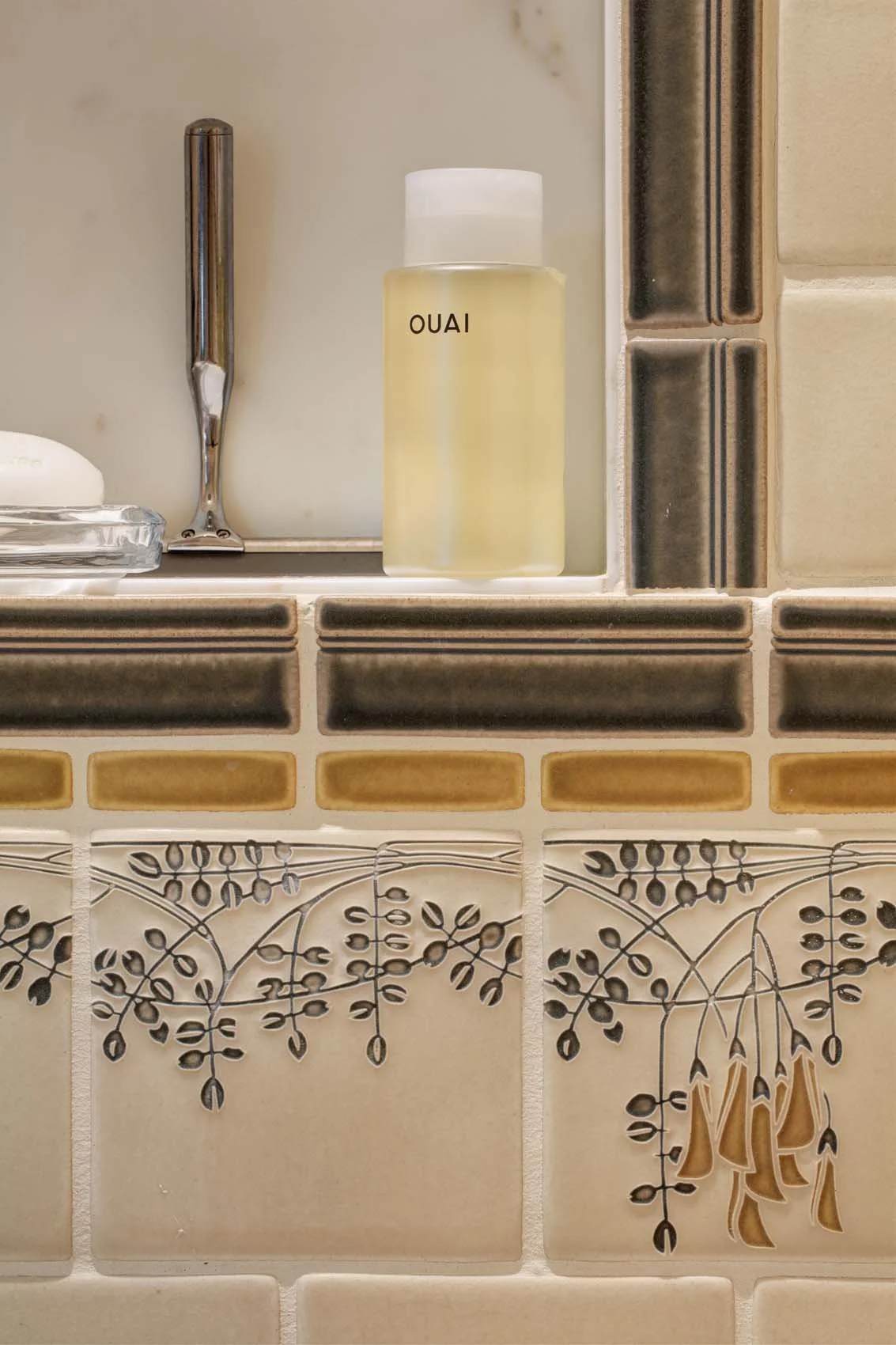
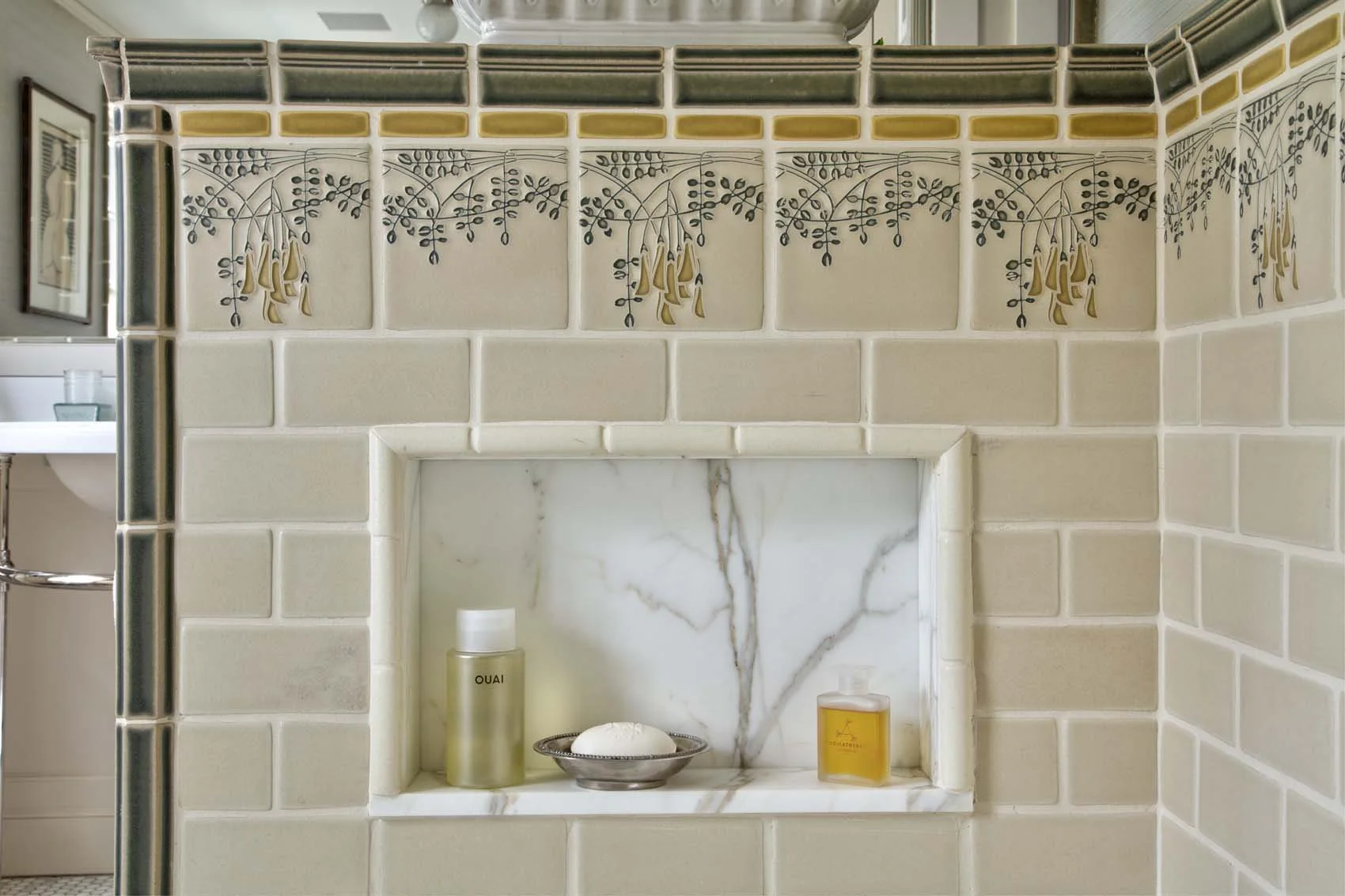
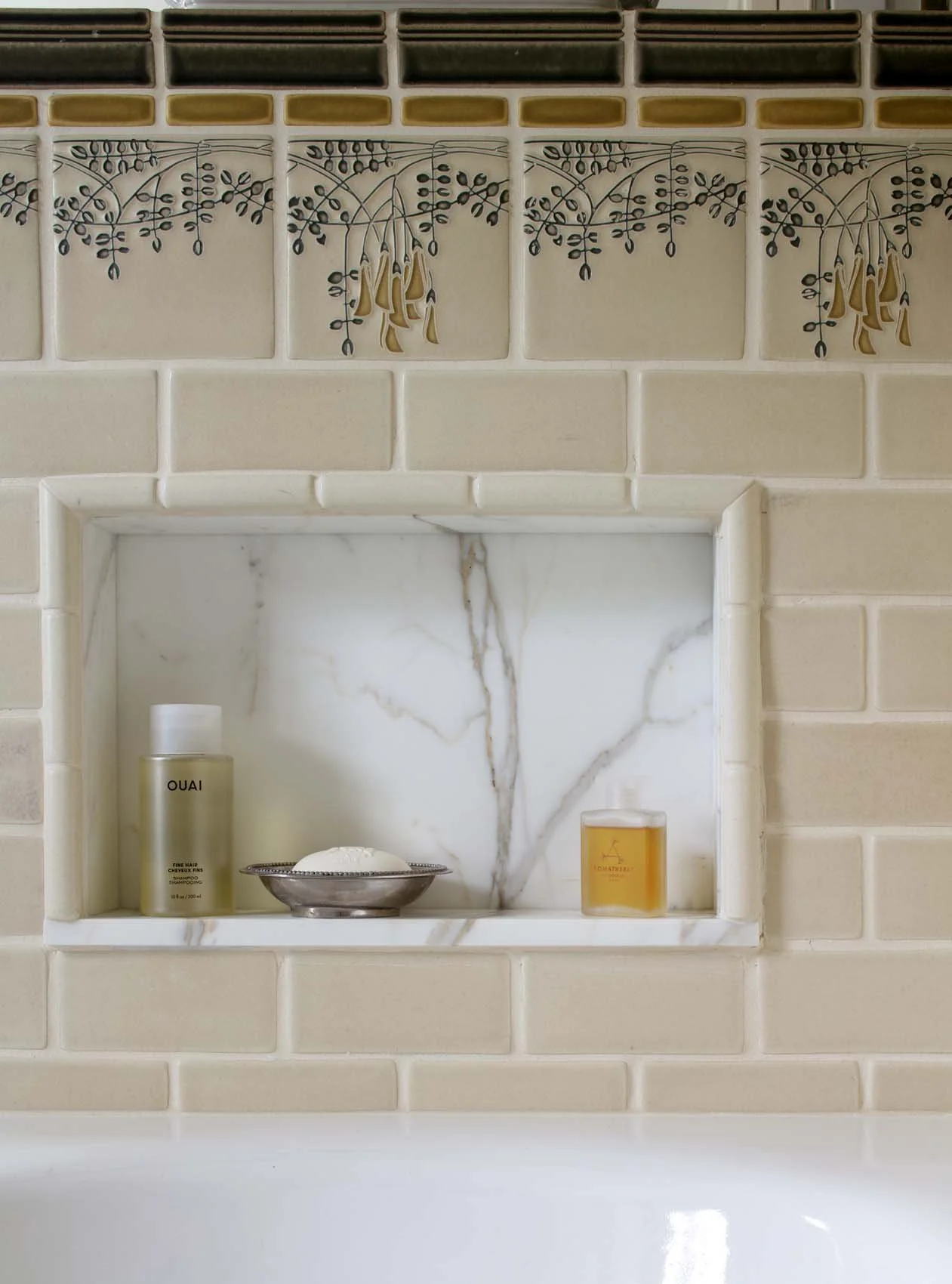
At Motawi, it’s called Flora. But what Karli saw was wisteria—a vine with pendant blossoms, moving in a gentle, continuous rhythm. “I like wisteria,” she says simply.
The choice was also about atmosphere. Elsewhere, the house leans into bold color and layered expression, but here the intention was different. “I wanted them to be more serene,” she explains, describing the shift in tone she was after for her bedroom and bath.
It was also, unmistakably, about memory. The original bathrooms had been colorful and floral, expressive in a way that felt intrinsic to the house, even if they had not aged well. Rather than restore them literally, she chose to reinterpret that spirit—“an homage… an idealized version of what the house felt like growing up there.”
![Sands Point Renovation_28 Primary Bath[28].jpg](https://images.squarespace-cdn.com/content/v1/663ba938f4e8a77eb53cf823/1778009556925-Y6RYOWQ0316Z91CLI286/Sands+Point+Renovation_28+Primary+Bath%5B28%5D.jpg)
Designed from the tile outward
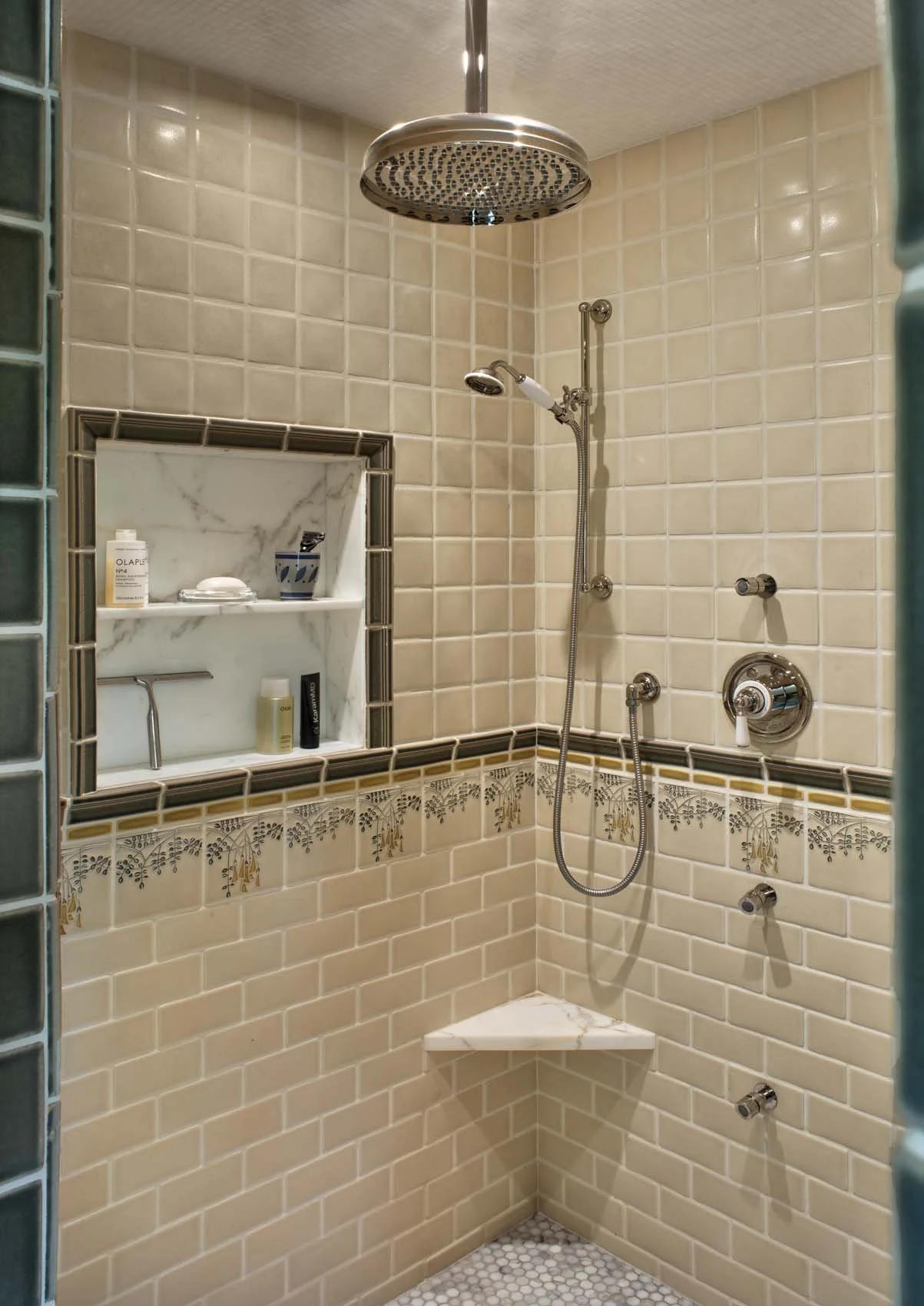
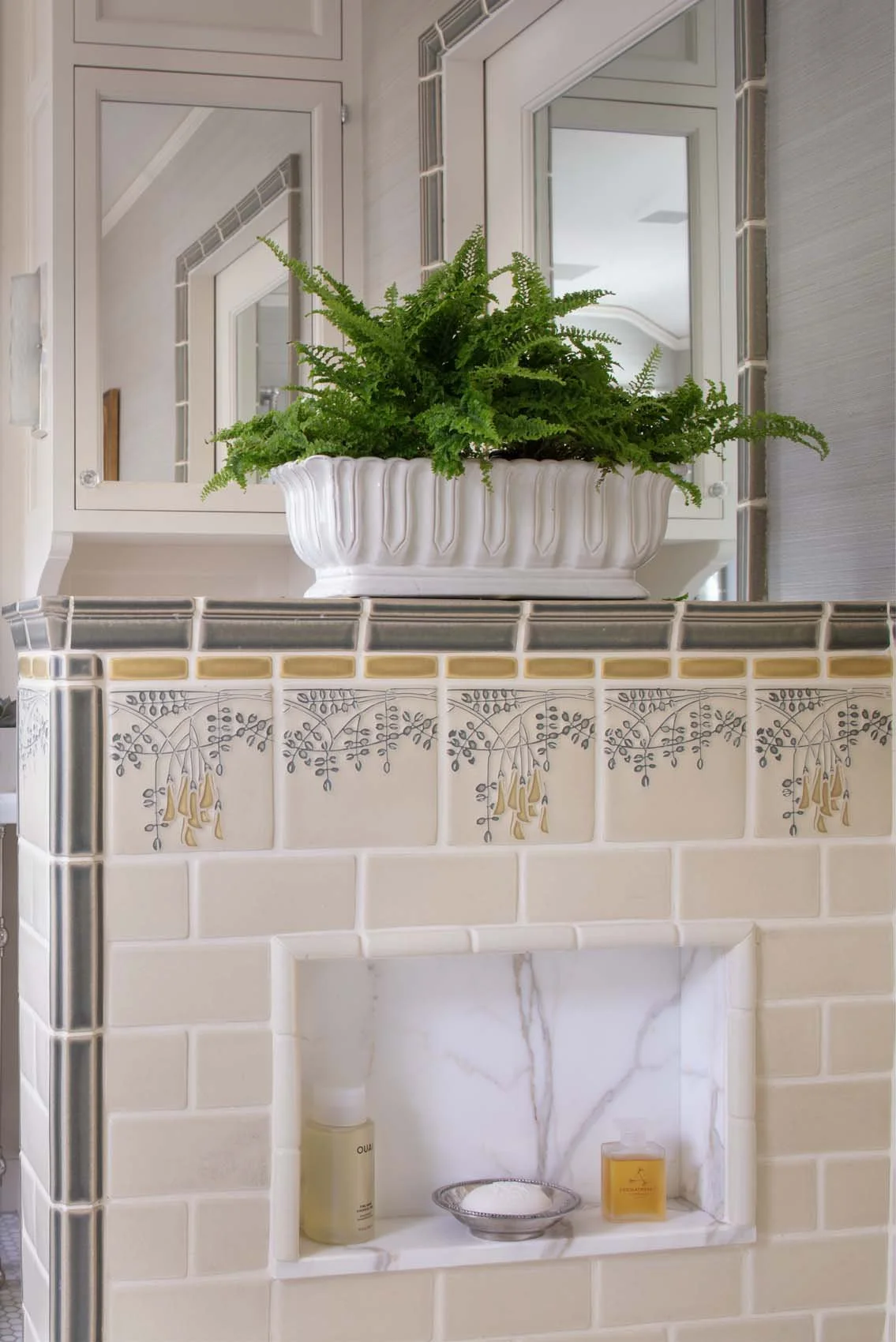
Once the wisteria pattern was chosen, the design of the room followed its lead. “She picked that pattern, and we designed the room around it,” Smiros says. Every tile was mapped in advance, allowing the vines and blossoms to move continuously across the walls rather than reading as a simple repeat. The effect is subtle but essential—less applied, more composed.
That sense of cohesion extends to the making itself. Each Motawi tile is formed and glazed by hand, with slight variation that gives the installation a sense of life rather than uniformity. It’s a balance between precision and individuality.
The room also holds onto what came before. The bathtub remains in its original location, refinished rather than replaced, and other decisions similarly favor continuity over erasure.
As Karli puts it, “you don’t want to live in a mausoleum… but you also don’t want to erase everything that’s meaningful.” That instinct extends even to the mechanics of the room. The shower retains its original configuration of body jets—three pairs set into the walls. They had stopped working years ago, but she remembered them from childhood and chose to have the plumbing restored rather than removed. “We don’t really use them,” she says, “but I’m really glad we put them back—it brings back that feeling.”
Across the house, that same thinking takes on different expressions.
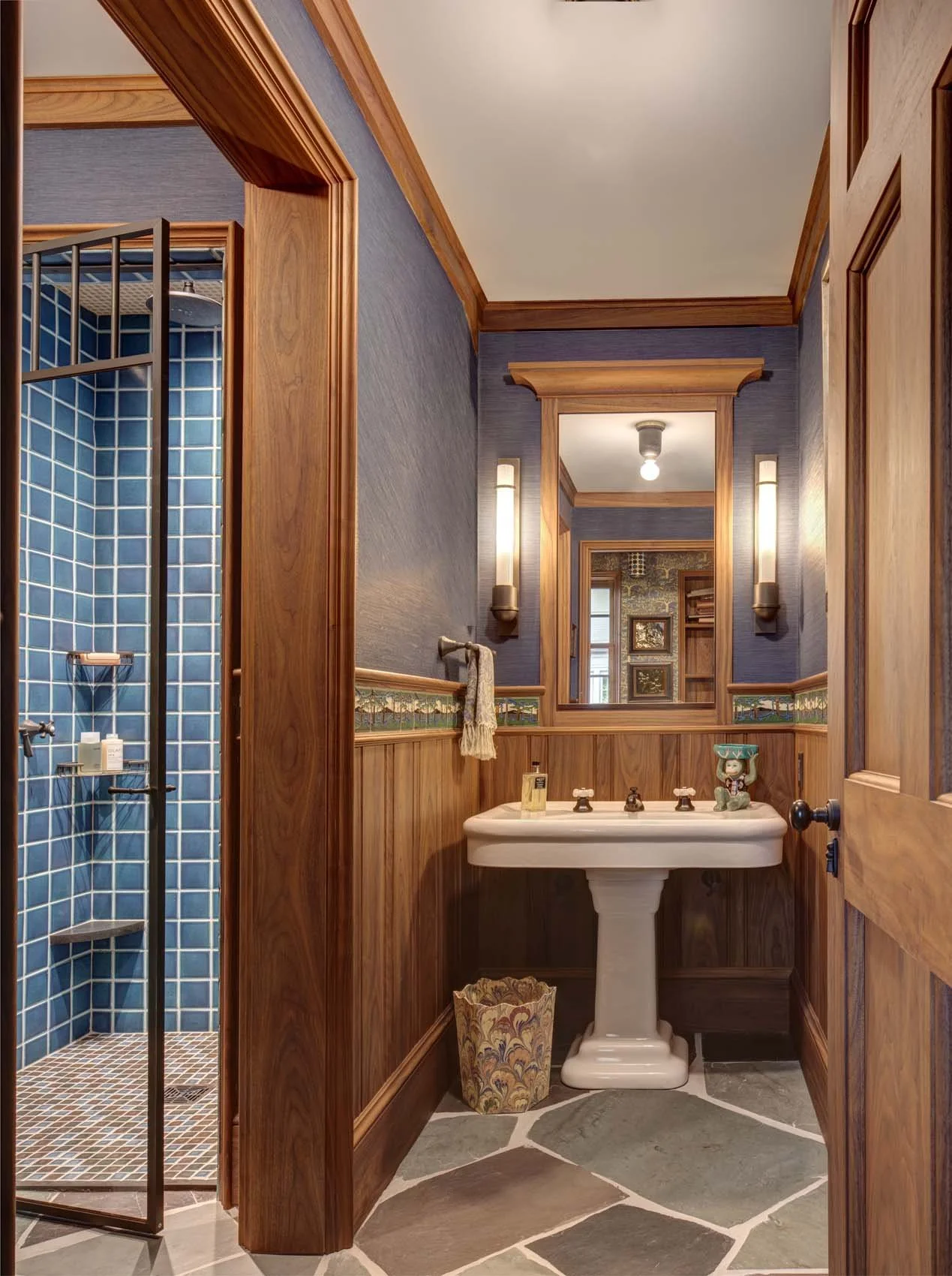
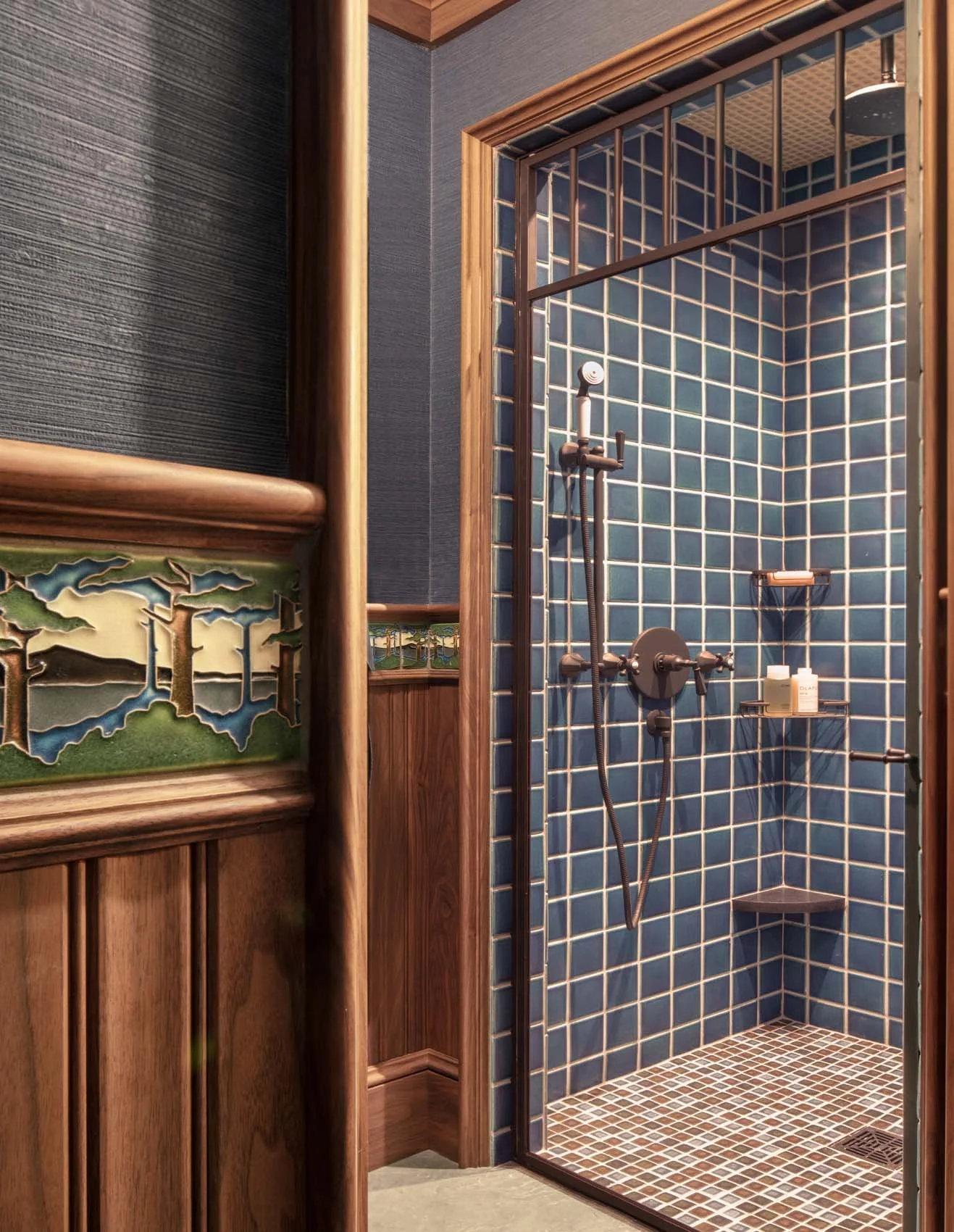
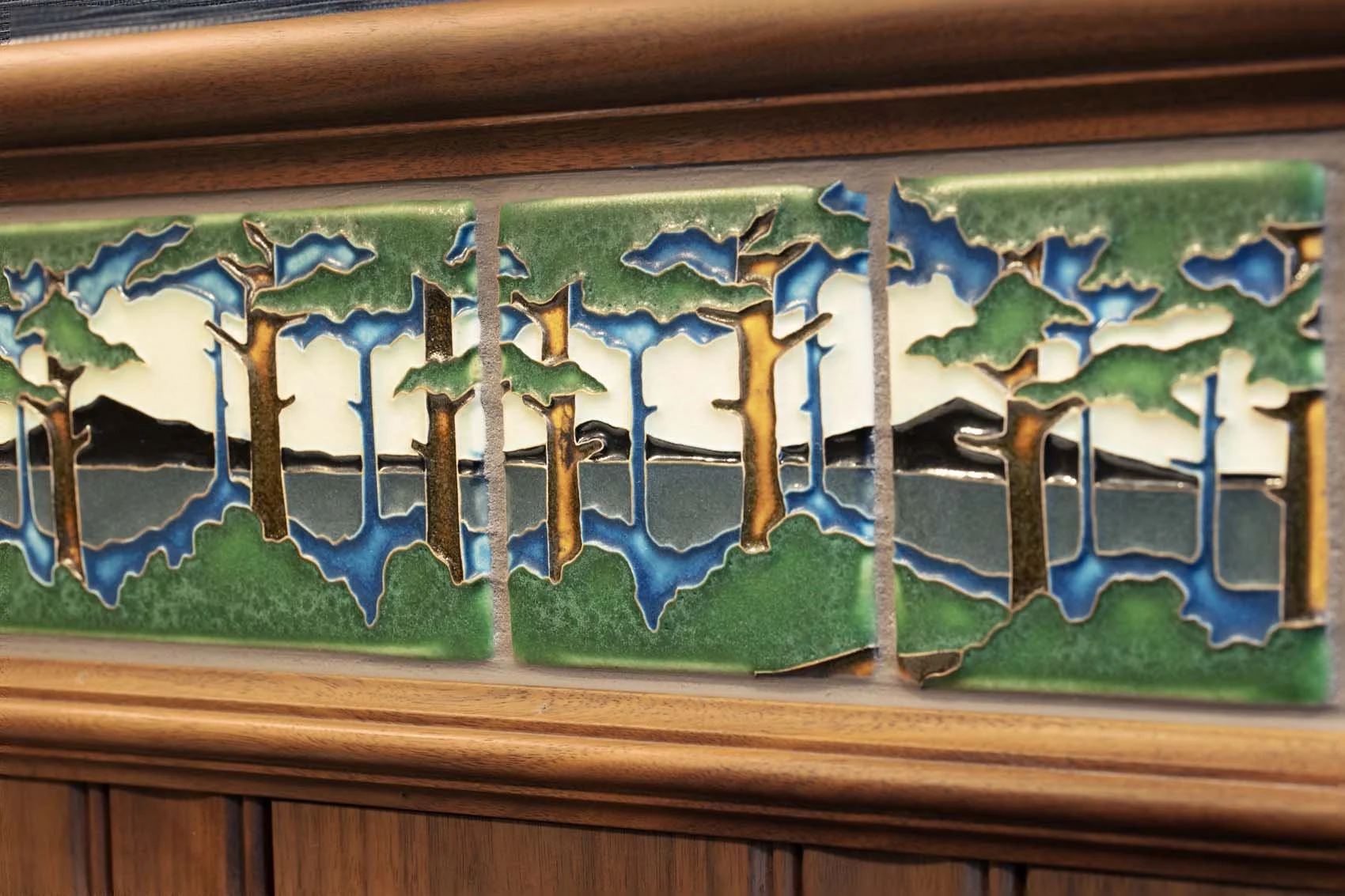
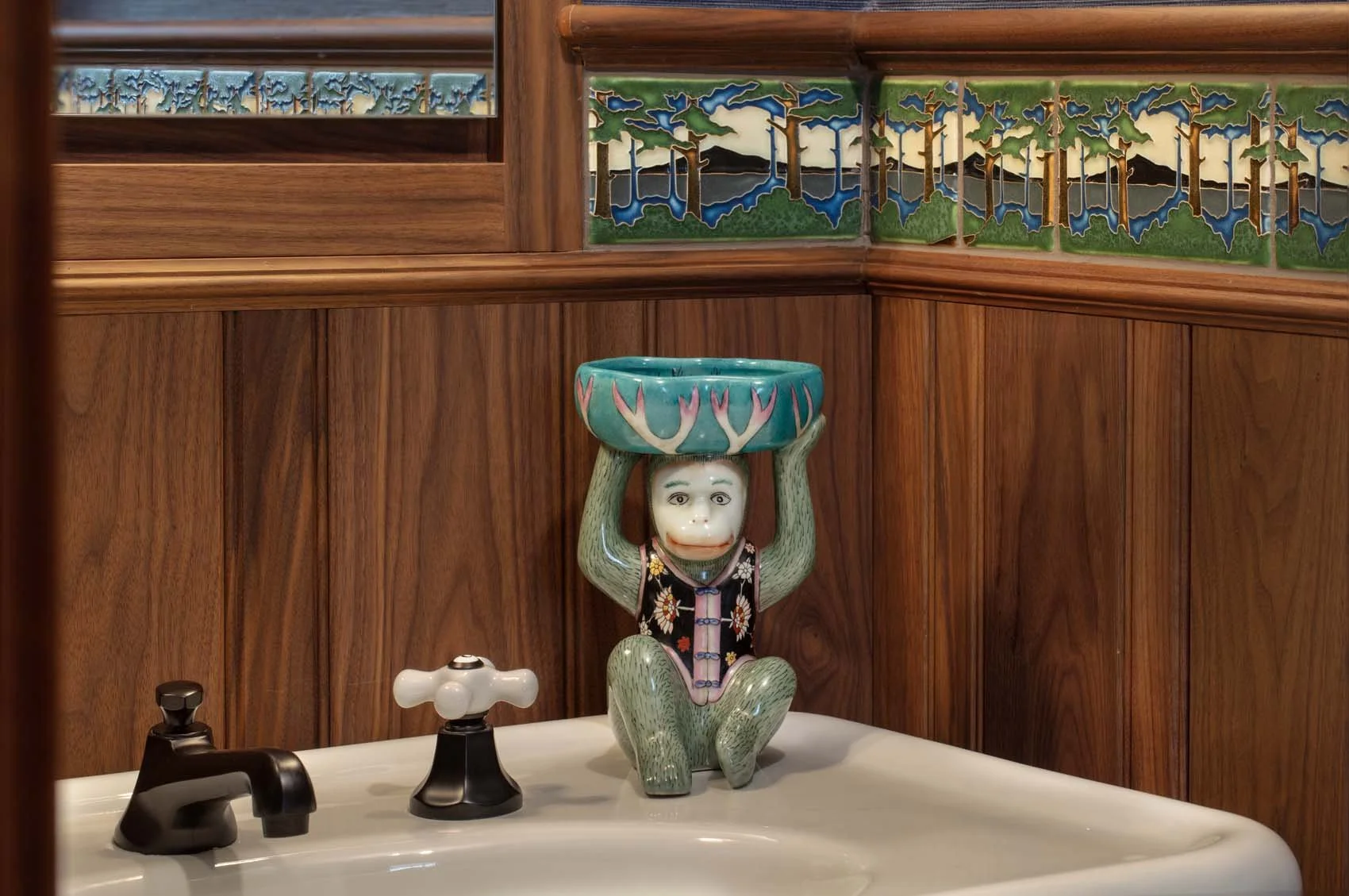
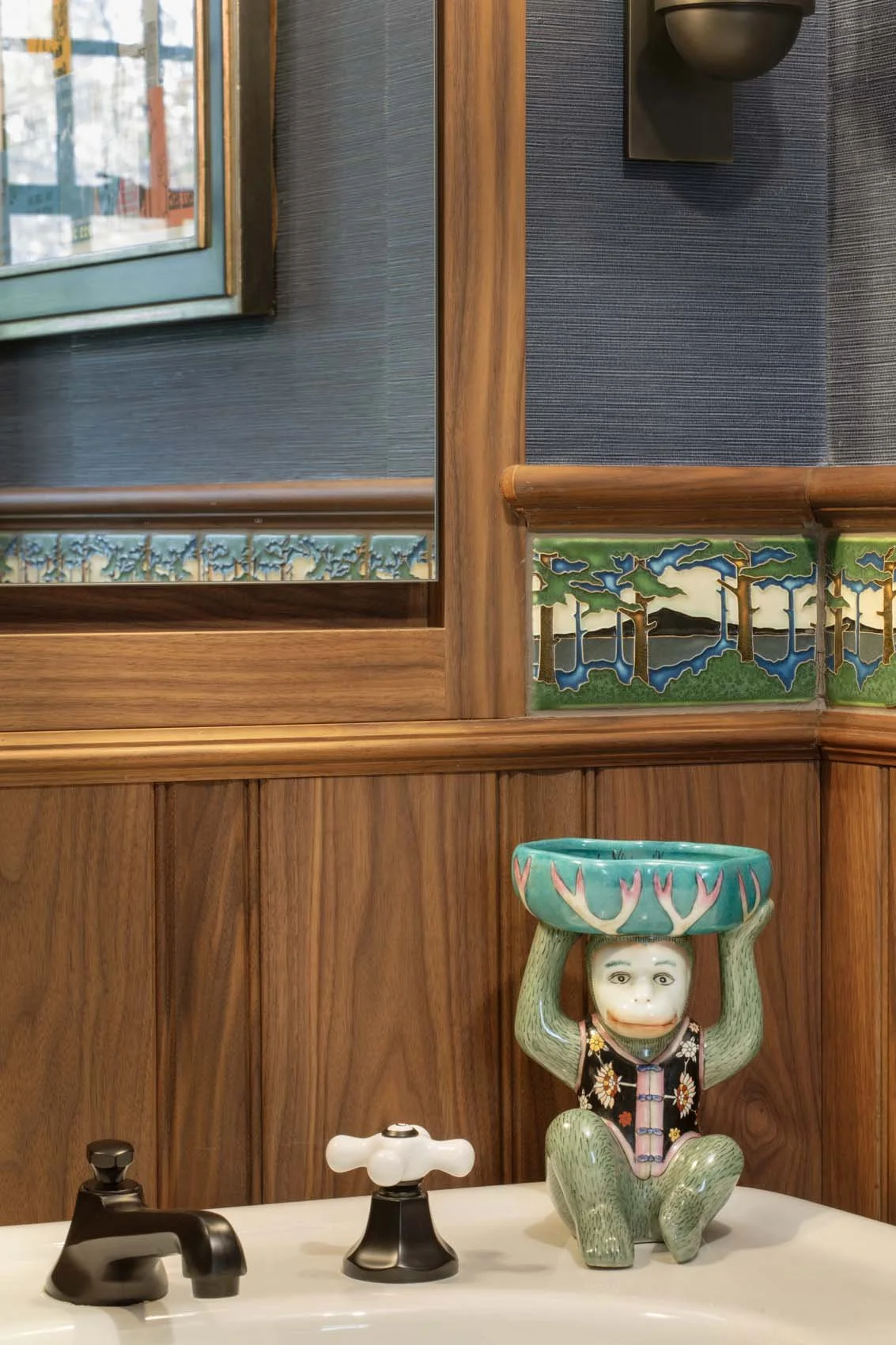
Just beyond the den, a Pine Landscape installation sits within a band of walnut paneling, quietly echoing the view outside. “You almost see the same thing out the window,” Smiros says, describing how the tile mirrors the wooded Gold Coast setting beyond the glass.
In another bathroom, the tone shifts entirely. There, tile from the German maker Golem creates a space that is bold, saturated, and unapologetically expressive—“really in your face,” as Karli puts it, laughing, before adding, “but it’s such a happy space—I kind of envy my guests.”
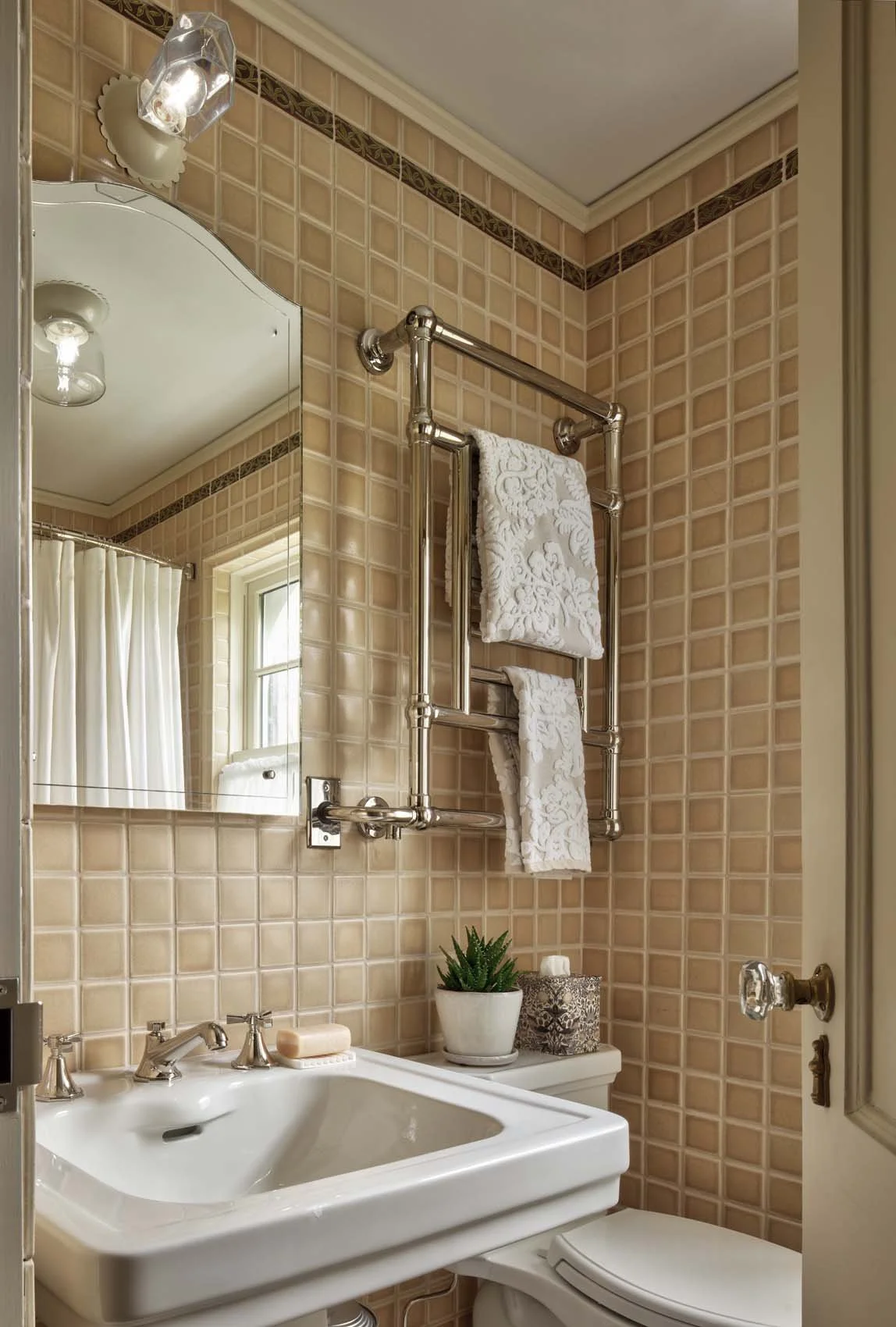
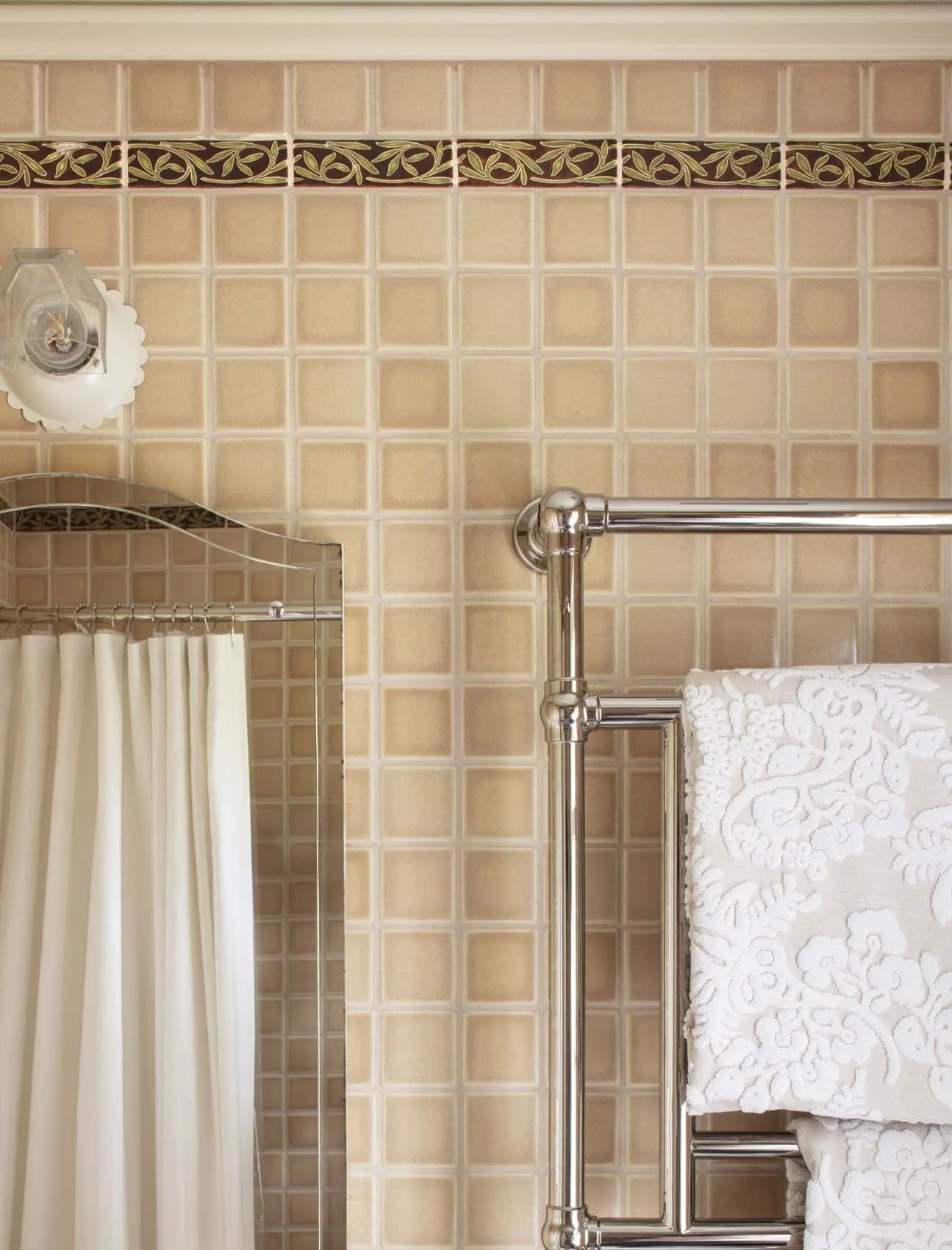
Even the smallest spaces reflect that level of attention. A compact staff bathroom, lined in warm, earthy Motawi field tile, is more restrained, but no less considered—another layer in a house where even the quietest rooms feel resolved.
Taken together, the three bathrooms describe the range of the house itself: expressive, grounded, and serene, each occupying its own register without competing for dominance.
In the wisteria bathroom, that balance is especially clear. “Oh, it’s lovely,” she says of the finished room, before clarifying what that means. “It’s much less dramatic than some other parts of the house… which was deliberate.”
The pattern moves gently, the palette remains calm, and the room settles into something that doesn’t demand attention but rewards it. It’s a space designed not to impress, but to live with.
And like the house itself, it doesn’t feel fixed in time.
It feels ongoing.